The Door on the Polling Place Map
An address can be correct and still fail to get someone to the right entrance. Accessibility at a polling place begins with the entire path into the voting room.
In this story 5 sections
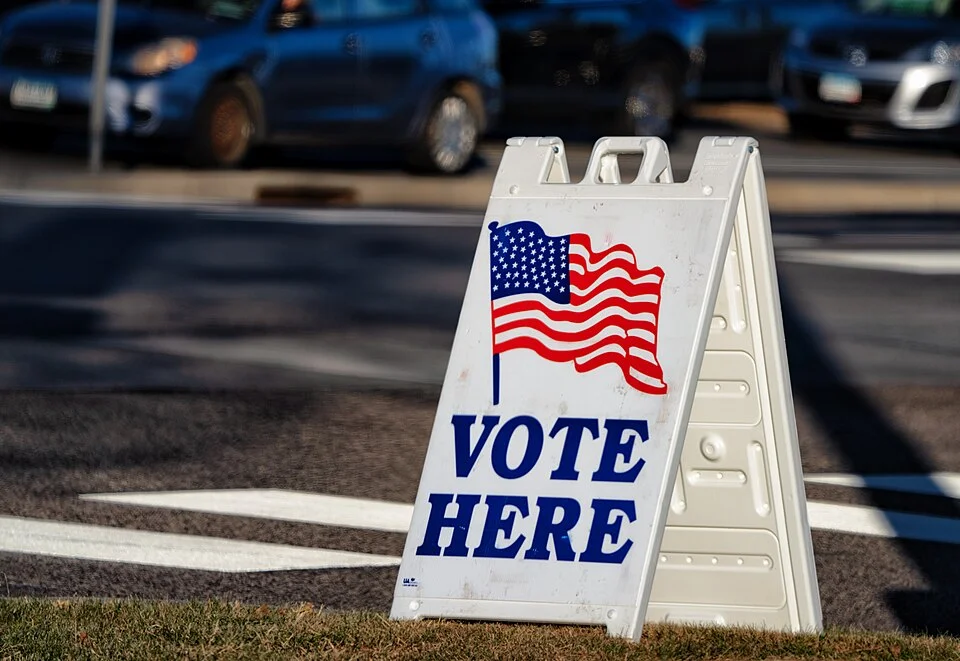
A photograph of an election sign in Woodbury, Minnesota, says something very simple: people were being directed to vote here. It was made on November 3, 2020, and tells a little about the approach to a particular building on that day. If the photograph were all someone received in a message, it would be remarkably poor guidance about a later election. It does not describe their assigned location for that election or confirm which entrance is currently in use. What it does capture is the first public instruction many people look for when a familiar building has been given a special use.
There is a small but considerable difference between knowing where a building is and knowing how to reach the room inside it. A school or civic center can cover half a block and have many doors. A pin can be positioned in the middle of its roof for a good reason without giving a wheelchair user, a person coming by bus or somebody getting out of a car a useful starting point. At a polling place the answer has to be found at a particular time in the building’s life. The normal front door may not be the entrance the public is meant to use on that day.
Try an address with two routes attached
Draw an imaginary community center with a main road on one side and a smaller street on the other. Give it a broad staircase below a door everybody usually thinks of as the front. Now add an accessible entrance reached from the smaller street, and a room intended for voting. The building has the same ordinary address. Two readers following it may meet quite different instructions and surfaces before they reach the room. The quality of the route description depends on whether it accounts for the discontinuity between the address and the intended entrance.
Begin from where someone arrives. A person may get out of a vehicle, walk from a stop or come along the pavement. Each movement gives rise to slightly different questions. Is there a crossing between the stop and the entrance? Does a path out of a drop-off area connect to the door without asking people to cross active lanes in an unexpected place? Is the route visibly marked before the person meets stairs? Accessibility guidance from the U.S. Election Assistance Commission addresses matters including parking, access routes and entrances. Starting with the entrance alone can make an observer miss much of the work the guidance is trying to check.
Try drawing the whole route on an accurate site plan. Keep the approach visible even if the last fifty yards look simple to the people who normally arrive from the other direction. If a sign tells someone to go round to the back, which corner do they reach first and is there appropriate indication at the next turn? A useful sign can make the right destination easy to see again. The line on the plan should leave space for the actual path and the decisions someone has to make while following it.
Inside the building is another journey
Once through the door, a voter may still need to reach a particular room. The route involves conditions that a pin on a street map cannot describe. There may be more than one hallway, a door that normally requires a key, or an interior turn obscured by a temporary queue. A path that looks clear when someone inspects the empty building could become hard to follow when tables, signs and people move into it. Consider those changing objects as part of the arrangement and leave the route in working order when the room is in use.
A good place to check is the first point at which someone could follow the wrong group. One stream may lead to a line. Another could consist of people completing the next part of a process. A third might be the path out of the building. From one side of the room the three are distinct; from the first hallway turn they might look like one dense mass. A small, appropriately placed sign or member of staff can give a visitor the information they need before they arrive at the wrong place. A map can make the difference understandable but may be several decisions behind where someone actually lost their bearings.
For a useful review, set aside the shortest route taken by a person who already knows it. Have someone unfamiliar with the arrangement describe what information is available before each decision. An accessible route should not require a secret set of instructions known only to frequent building users. If guidance is provided in several formats, check that they refer to the same doors and room. A phrase such as “main entrance” can acquire a very different meaning in a notice written by someone who always comes in from a staff parking lot.
Old photographs can have a good use
The photo from Woodbury City Hall can help a reader recognize the kind of message that can signal a change of use to people approaching a civic building. Its date also warns against drawing an unwarranted practical conclusion. Even a detailed picture of that day would not establish current assignments or access arrangements. A voter or someone helping them should use up-to-date election information from the relevant official authority for the place and election. A date on an image can make it more useful as evidence because it ensures the viewer knows what period the evidence concerns.
The same distinction matters when someone forwards a local announcement. A screenshot of the map may exclude its date or election label. A quick copy of the street address may leave out the named entrance. Keeping the official source, date, site name and specific door together allows a later reader to tell whether those details still belong to the situation they are asking about. Old images need not be deleted from a public record. They need context and a clear route to newer information.
A building might be used again in elections but work under a different arrangement. Construction could change a path or close a door, and work inside the building could require a different room. Some changes have the appearance of a new site even when the address is the same. Review the path the public is expected to follow each time. A record of an earlier arrangement can identify which questions to ask, including where people waited and which approach proved confusing. It cannot certify the new one.
The route needs someone to own each handoff
On the plan, assign each point to someone with the authority and ability to check it. A building manager may know when a particular accessible entrance will be unlocked. The people preparing the voting room can check that the queue and tables leave the intended route open. The election staff can make sure the outside directions name the same entrance as the official listing. It is possible for all three parties to do useful work and leave a gap if they assume the other person checked the common turn.
A timing change can reveal that gap. Imagine a door that normally opens with the rest of a building but needs to be used earlier for this purpose. A sign installed correctly the previous evening cannot open the door the next day. A keyholder’s careful work cannot help if the signs lead somewhere else. Information about the person responsible for checking the handoff is useful alongside the diagram, because the first voter should not have to discover how the separate plans fit together.
A test from the other end
Stand in the imaginary voting room after every table and route marker has been put on the plan. Work backward toward the door. Which exit do people see first? Could someone move in the reverse direction without entering another queue? Is the first outside sign in a position where it can sensibly be used in daylight and at the hours the official arrangement needs? This direction of review often finds a problem the simple walk in missed. It also helps distinguish things installed for a convenient setup from things a visitor can interpret as a route.
A resident who notices a gap may be able to give an appropriately brief account to the people running the site. State where the route seemed to stop being clear and what sign or obstacle was there at that time. Do not collect images or personal details of voters to document a physical issue. In many cases a sketch of the junction and the obstruction is sufficient. If a remark concerns an actual access need at the time of a visit, use the official authority or election staff for the appropriate assistance and current information.
Take another look at the address where the lesson began. You can put it into a form and arrive at the general place. The next question is where a person can continue from there. A working route gives people enough information to recognize the next turn and enough room to take it. The building may be the most permanent fact in the picture. The availability and legibility of that path are things someone has to arrange.