A Number Before a City Counter
A paper ticket gives a visitor a place in a queue without assigning them a spot on the floor. Philadelphia’s municipal kiosks show how that small change affects a visit.
In this story 6 sections
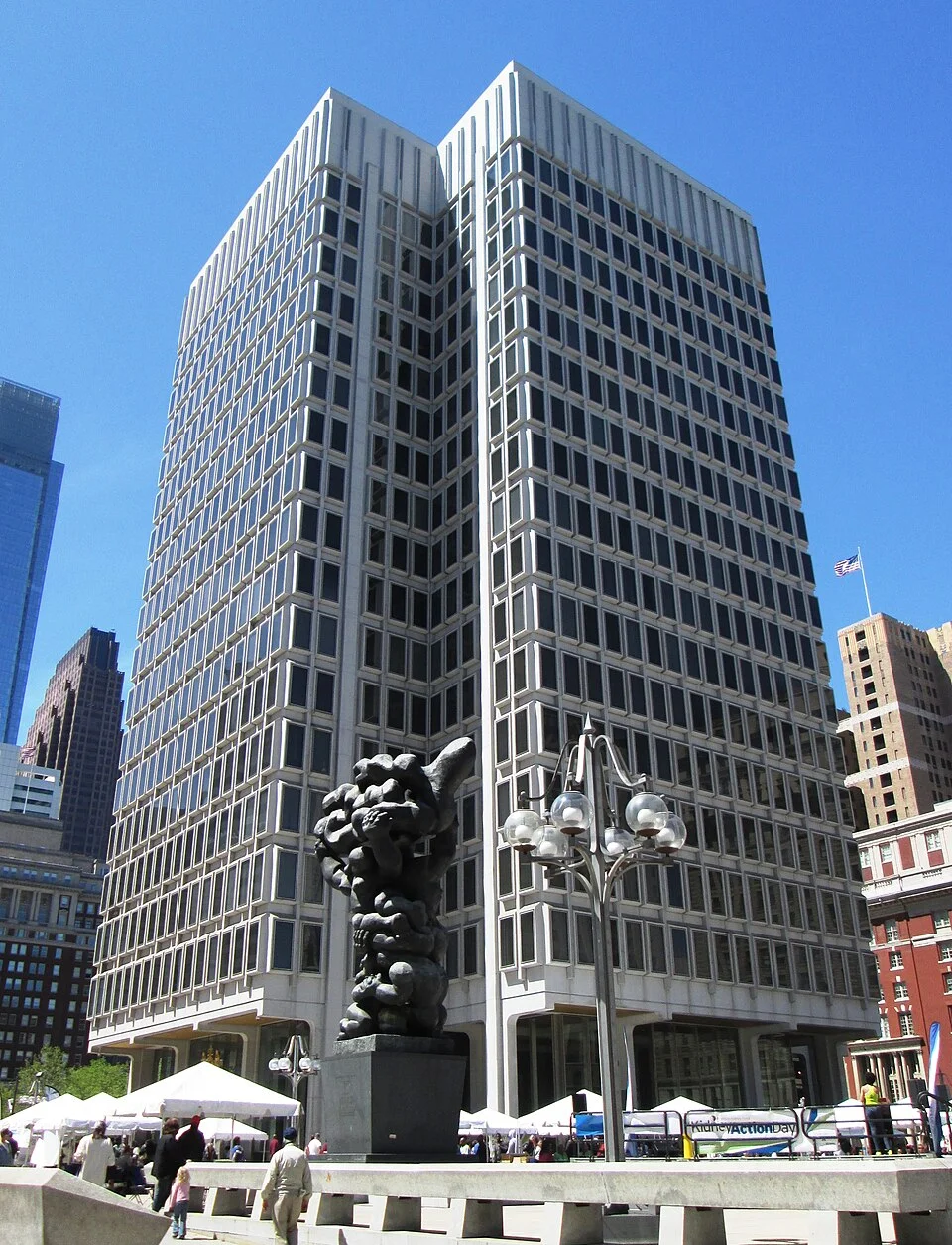
The Municipal Services Building rises above a public plaza in Beyond My Ken’s photograph of Philadelphia. The picture helps a visitor recognize the destination at street level. It does not show what happens after a person comes inside to find a city office. One possible part of the trip takes place at a kiosk, where a short piece of paper can give a visitor a place in a queue. Philadelphia's Department of Revenue has described using kiosks at this building to take a ticket and track a place in line. After that, a visitor's position in the queue need not be the same as their position in the room.
A physical line announces much about itself. A person can see who is ahead, watch the front of the line and move when the whole group moves. The inconvenience is that they need to keep occupying roughly the right part of the floor. A waiting area with seats can be difficult to use without losing the place. Moving the order to a set of tickets removes that particular requirement, but it also hides some information a person used to see just by looking. The ticket, display and staff need to give back enough of it for the room to remain understandable.
The first choice is what kind of visit this is
When a visitor reaches a counter, the person working there often begins by asking what brought them in. A kiosk can ask part of that question earlier. A person making a routine payment may need a different desk from a person asking someone to explain a notice. Another visitor might have an appointment already made. This can make things faster once a person is placed where somebody can help. It also asks a person unfamiliar with the office to select a useful description of their need before speaking to anybody who knows the building.
Language on a screen matters here. A person may recognize the service through everyday words while an office knows it by a programme name. The useful choice gives enough information to distinguish among common reasons for coming without requiring a visitor to diagnose the whole matter. If the menu doesn't include a recognizable option, there should be a visible way to ask for help. Sending the visitor to the wrong queue does not save them time simply because it shortened the exchange at the kiosk.
This is one reason to place the service information before the device, or to make it visible from the entrance. Some people only need to be told where an existing appointment should be registered. Others want to know whether this building handles their question at all. Putting a clear list nearby avoids asking someone to accept a place in line just to discover that the queue leads somewhere they never needed to go.
A number can mean a place without promising a time
Suppose a person takes a ticket marked B12. That number does not tell them what happened to B11. It can identify a request in a given part of the system. The display may ask B12 to go to a named counter when it is ready. A visitor who sees a higher number called first might wonder whether their own was skipped. There could be distinct queues for different services, or prior appointments handled separately. If visitors do not know those distinctions exist, what looks ordinary to staff can appear like an error to everybody waiting.
A projected wait answers another question. It may be helpful to say that delays are likely or that a person has a few groups ahead of them. The length of an individual exchange can vary widely. A ticket that determines the order does not make all the wait equally predictable. If an office provides estimates, it is useful to distinguish an estimate from a scheduled appointment time. A person deciding whether there is enough time to leave the waiting area needs to know what kind of time they are reading.
Then there is the transition between being in the queue and being called. The visitor has to recognize the identifier and the place to go. Announce the identifier or put it on a display, and also make the destination easy to find. A number can be clear on one screen and the destination letter obscure on a partition. A queue system does little for a traveller who receives the right instruction but cannot see where the numbered counters begin.
Leave several ways to receive the call
Philadelphia's published explanation describes printed tickets and alerts for visitors in its system. A paper ticket can be useful without a smartphone. A visible status screen and a clear spoken call can reach people by different means. A mobile alert can help a person who waits somewhere nearby, if receiving it is an option they can use. Think about somebody who cannot hear a call while looking down at papers, someone who cannot see the display from their seat or a visitor with limited service on a phone. A good waiting plan does not require all three to use the same channel.
Public status information need not display full details of everyone's business. The necessary facts are typically that a particular request is ready and where the person should report. A ticket identifier can supply those facts without adding the reason for the visit to a public announcement. The design can keep more personal information in a separate exchange with the office. What a visitor needs to recognize while waiting is not necessarily everything the staff need to know once the visitor arrives.
If the system permits a visitor to leave the waiting area, clear instructions about when to return matter more. A closed door, security line or longer walk can change the time it takes to reach the counter after an alert. Somebody waiting in a nearby seat can react much more quickly. A notice can say what happens if a call is missed and how the office can help, rather than making every visitor guess how much priority a brief absence might cost.
Staff still make the service work
A queue device can direct attention, but it does not answer every reason people come to a service desk. Philadelphia's later explanation makes the point that kiosks do not replace its representatives. For some visits a person needs to speak with someone who can examine the particular problem. For others, a callback or appointment may spare a trip. The choice among these is part of the service design. The office saves time only when a person can enter the appropriate path and get an answer, rather than when the first screen has successfully printed something.
Consider what the service should do when an option was selected incorrectly. A visitor might discover the mistake on reaching the desk, after waiting long enough for the number to appear. Staff need some way to direct them that is less burdensome than starting without explanation at the back of a new line. A screen that repeats the reason for the queue in plain language before producing the ticket can prevent some of those trips. The remainder still needs a person able to understand the situation.
There is also useful work in looking for a pattern in mistakes. If visitors frequently choose the wrong category for the same kind of question, the problem may lie in the labels or in where the instructions are displayed. Counting only the average time before a ticket is called would hide that extra wait. Following a few ordinary trips from entrance to answer can tell an office which signs or options have to change.
Find out which part became faster
Imagine an office where visitors spend less time standing after a ticket system is introduced, while the number of cases workers answer each hour initially stays unchanged. This can still be a useful improvement. A person who needed a seat while waiting is no longer asked to stand for the entire interval. It is a different result from shortening the visit itself. A useful public report can keep those outcomes separate and ask about both.
Someone should also be able to find out what happens during a failure of the ordinary kiosk or display. A temporary sign and a staff member at the right point can restore some of the information the device usually supplies. The first visitors to arrive cannot be expected to learn of the change from other people who have already used the substitute arrangement.
What the paper replaces
The tower in the photograph does its first job from a distance: it helps establish that somebody has arrived at the right address. Inside the building the paper ticket answers a more specific question. It says that a particular request has been accepted into a system that will call it when there is a suitable place to speak. The person can wait without visibly becoming the next object in a line across the floor.
That substitution is exactly where the design can succeed or fail. A ticket works when the visitor knows what the identifier belongs to, how to follow the call and what they should do if something is unclear. A clear device and several ways to receive the call make that small piece of paper into useful information. It can then give somebody the option a physical queue did not: a place in order without a requirement to stand in it.