The Shelf Outside a Food Pantry
A small cabinet lets neighbours leave and take supplies without meeting at the same time. The welcome on its door has to stay useful even when its shelves are empty.
In this story 6 sections
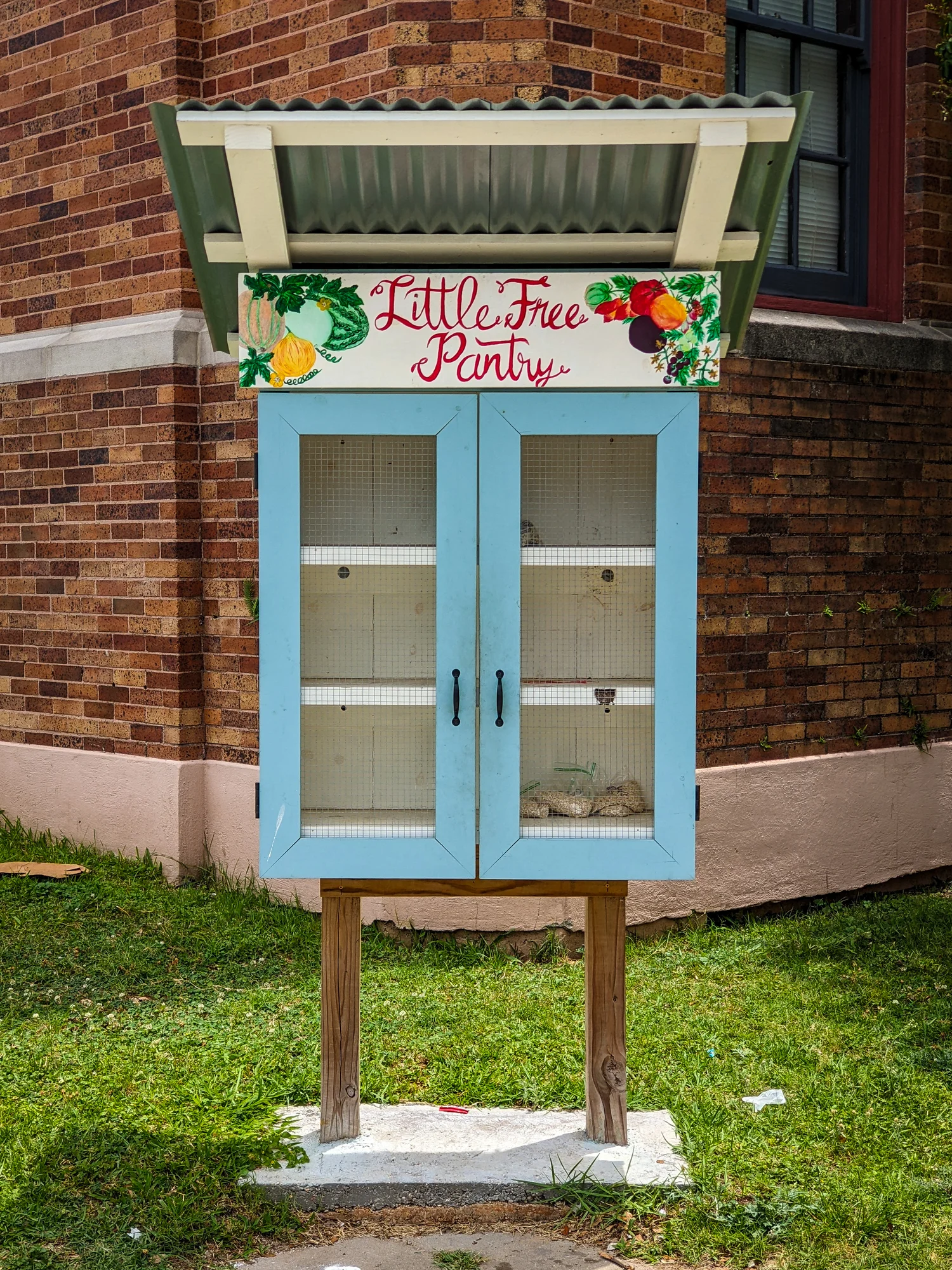
The blue cabinet in Bart Everson’s photograph sits on wooden posts in front of a brick building. The doors put several nearly empty-looking shelves in view. A sign above the doors identifies a Little Free Pantry. Nothing about the picture suggests that a visitor is about to find a counter or a staffed desk inside it. The scale is part of the appeal. A neighbour can leave something during one trip and a different neighbour can come by later for something they can use. They do not have to arrange to arrive together.
The Little Free Pantry project explains that these cabinets may be stocked by people contributing when they are able and that supplies can run out. The pictured cabinet in Mid-City New Orleans is one example from a particular moment, not evidence about what is available now. The useful question is how the structure can make a small, irregular offer clear. It may be open when a staffed place is not. It cannot promise that visitors will find the same things at the same hour on two days.
A shelf in public does two jobs at once
A person approaching with something to leave needs to know that it belongs there. Someone taking something needs to know whether that is actually allowed, and whether there are limits or useful instructions. A cabinet without a visible purpose could be mistaken for private storage or for a cabinet waiting to be moved. A plainly marked sign can give both people enough context to act without asking strangers nearby to explain it.
The two purposes can occupy the same shelf with little difficulty when there is space and supplies suited to the way the pantry is managed. At other times a contribution can fill the space without meeting what visitors need. Some things may not be accepted at that site. A notice that states which kind of contribution is suitable helps keep the cabinet useful; a list need not be so long that it obscures the basic invitation. Food handling and any applicable requirements belong with the people responsible for the project and their current instructions, rather than with guesses made from looking at the shelves.
It helps to think from both sides of the door. A visitor with a bag may reach the cabinet from a pavement or a small entrance beside the building. Somebody stocking it at another hour may come from inside the grounds. What counts as a convenient location depends on the approach available to both. If the cabinet is beside a locked gate for part of the day, calling it open without saying which direction is usable can cause a needless journey. A picture of a door wide open on one visit says little about how people usually get to it.
Distinguish access from availability
A map of pantries can be very useful for finding addresses. It cannot be treated as a map of each item currently offered. A few people can empty a small shelf in a short interval. A photograph drawn from an ordinary day can illustrate the kind of cabinet but still be an unreliable account of today's contents. A site marked active tells somebody a service is intended there; it need not be a claim about the present stock or the hours when a volunteer is nearby.
There can be value in clear alternatives for someone who needs something more predictable. A notice can explain the distinction and point to an organization providing current information about staffed services where appropriate. That does not require a cabinet to advertise every service in a district. The important thing is not to suggest a guarantee it cannot meet. Somebody using the cabinet as one portion of a larger routine may need to know whether a nearby location accepts visitors at a set time instead of relying on the contents the next passerby happens to leave.
A volunteer can also read an empty shelf in more than one way. It could mean contributions arrived recently and were useful to many people. It could mean nobody has checked the condition or replenished it for days. The visible result alone does not settle which explanation applies. A routine visit and a short record of substantial changes help the organizers understand the difference. The public does not need to know or record who took a particular item in order for the organizers to learn that the shelf needs a more reliable supply.
Make it easy to help without demanding an account
A small cabinet can be useful to someone who would prefer not to have a conversation before taking an item. The sign can support this by making the invitation plain, while a separate way to contact the people responsible can let somebody flag a problem with the cabinet. None of that requires displaying the personal identity of everyone who contributes or visits. The thing the organizers usually need for a maintenance enquiry is the location and the issue observed. A question about a loose door can be answered without asking the visitor to explain what brought them there.
One can imagine a location where several neighbours take turns looking after the shelves. If several people visit on the same morning and none for the rest of the week, the arrangement may look more active in a calendar than it is at the cabinet. Planned visits help distinguish an overall willingness to contribute from the intervals when someone can check the site. This does not make a volunteer group a public agency with formal hours. It gives them a way to keep the shared thing useful and to know where a small amount of effort can have the most effect.
The place the cabinet occupies also deserves attention. Visitors should be able to stop, open the door and take a look without blocking a narrow path. Advice for someone interested in hosting one can begin by looking at the route from the pavement and the amount of protected room available at the cabinet. The quality of the sign has little value if it is too high or awkwardly placed for the people who came to read it.
Explain who looks after the cabinet and how to check changes
If a project relocates, a map pin left at the old point can turn a good source of information into a series of unsuccessful visits. An explanation at the old location might help for a short period, if it can be posted appropriately. A page or notice that names the correct place and describes the new access can reach people who plan their trips before leaving home. The updates concern the operation of the cabinet itself. They need not make claims about exact supplies that no one can maintain in real time.
The cabinet has several timescales even when it stays at the same address. A passerby gives it a few seconds. Supplies might turn over in an hour or a day. Its shelves and door need care over a much longer period. A piece of information fixed to the cabinet can be suited to that longer period; a notice about a particular week's change may need to come down afterward. Use each kind of notice for what remains true while people read it.
The box is not the whole of the arrangement
Imagine that a group has a choice between two places near the same street. The first is easy to see from a distance but nobody in the group passes it regularly. The second is a little less conspicuous and brings people past who can see whether the cabinet needs attention. The easiest site to photograph is not necessarily the easiest one to maintain through the year. The value of each depends in part on a real plan for visitors reaching it and for people responding when something about the site needs to change.
Do the same exercise with a map listing. A name that makes sense to hosts who use one entrance might direct someone else to a different part of the property. A short description of the approach can make the listing useful without broadcasting the identities of volunteers or visitors. If there is a problem with the door or a temporary interruption, somebody with responsibility for the cabinet needs to know how to update that description. The continuing effort is modest only so long as the small tasks have a place to go. Making that effort visible can help a neighbourhood keep the cabinet open on understandable terms.
Read the sign together with the shelves
Return to the photographed cabinet. It takes very little room and leaves the items visible behind a pair of doors. The invitation it makes is modest. Across visits made at different times, someone can leave a useful item within the local arrangement and another person can take it. The frame and the shelves supply somewhere for that exchange to happen. The sign supplies a description of the exchange that a first-time visitor can understand.
That description stays useful when it tells people how to reach the cabinet, what the offer covers and where to find better information if they need it. A small supply cannot answer every visit. A clear invitation can still make it easier for people to give and receive it without treating either person as a stranger who needs to explain why they stopped.