A Stop on the Mobile Library Calendar
A library vehicle brings a collection close to readers for a particular window of time. The parking space, timetable and pickup instructions all shape who can use it.
In this story 5 sections
A person looking for a branch library needs an address and opening hours. To find a bookmobile, the same person may also have to know which driveway the vehicle uses and whether this Thursday is a visit day. There may be nothing in the parking lot to indicate where to wait until the library itself arrives. The shelf of books is a visible public service. The apparently ordinary instructions for getting to it do much of the public work before the shelf is within reach.
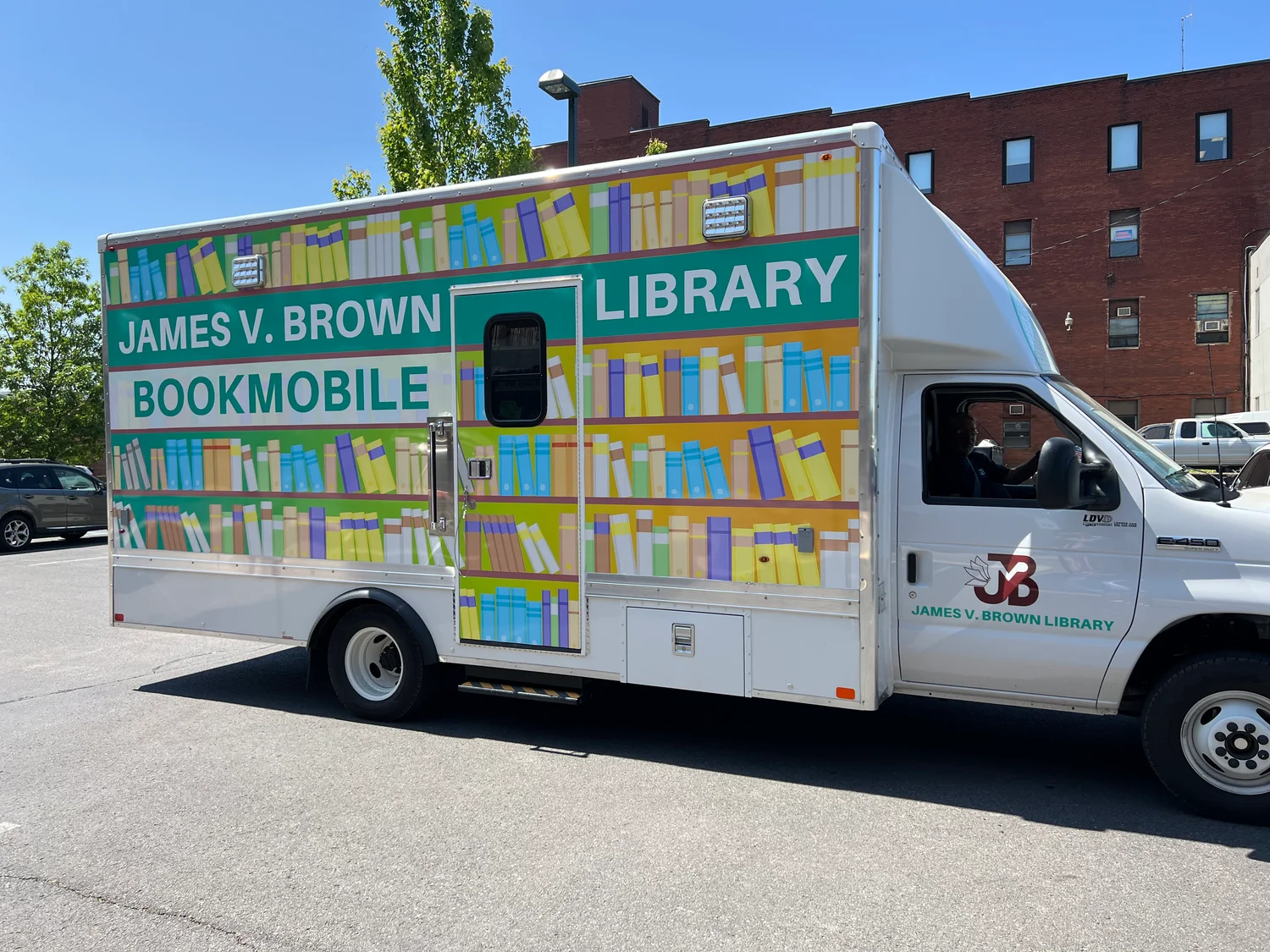
The James V. Brown Library in Pennsylvania gives a concrete example on its outreach page. Its Bookmobile serves sites in Lycoming County, with attention to rural areas where library access is limited. The library describes stops at places such as stores, municipal buildings and retirement communities. The address is part of somebody else's landscape between visits. A person who already knows the building may still need a little more description to find the service when the vehicle pulls in.
A timetable with a front door
A fixed branch can have a sign over its entrance every day. The sign for a bookmobile has to travel among places without a library door of their own. Imagine a stop listed only as community center. That could mean the car park next to the sports fields, the lay-by beside the accessible entrance or a spot behind the building. Adding an instruction such as beside the marked crossing from the main entrance has a different effect from adding another pin to a map. It gives somebody a landmark visible from where they have to make the decision.
Time has a similar front door. Every other Thursday has an inviting rhythm, but it lacks a starting point. A new patron needs at least one calendar date. Someone who copies the next two visits onto a family calendar also needs to know whether a holiday or seasonal schedule interrupts the pattern. The James V. Brown Library explains that its outreach schedules change with the season. A page that names the period covered and provides specific dates makes the next visit easier to distinguish from a recurring rule that has expired.
The duration can matter as much as the first minute. A forty minute stop lets a person plan around a walk from a bus, while a vague Thursday afternoon does not. On the other hand, inviting someone to arrive right at closing may leave no time to browse or set up an account. A well written entry gives start and end times, marks any distinct service window and avoids making readers infer how it differs from the host building's opening hours.
The collection that fits through the vehicle door
A bookmobile cannot hold the same collection as a large branch. It has to select materials and move them between visits. The point of that small collection is that people can still discover something without deciding what they want in advance. The title selected by a reader standing at the shelf may never have appeared in their search history. A selection with clear spine labels and a place for hand height browsing makes that chance more useful.
There is a separate route for a book somebody knows by name. Iowa City Public Library describes a service for choosing an item from its wider collection, placing a hold and asking to pick it up on the Bookmobile. Tulsa City-County Library likewise describes requesting materials from branches for pick up at a stop. These examples explain why a vehicle can give readers access to more than what it carries on a particular afternoon. They do not tell us what every outreach vehicle can deliver. A reader needs the instructions for the system that issued the library card.
The physical shelf and the holds system solve different problems for the same person. Someone taking a child to choose a bedtime book may prefer a small selection to an online catalogue with thousands of results. Someone looking for the second volume of a series may want to reserve it. A helpful service page lets the reader start with either intent. It does not bury the pickup instructions below a long account of what kinds of books are normally on the vehicle.
Plan the return on the way out
Imagine borrowing three books during a Tuesday visit. The next advertised visit to that parking lot is two weeks away. A printed due date falls on a Monday. The patron needs to know whether that is a mismatch to resolve, whether returns can go to another stop, and whether the items can be returned to a branch or a drop box. These are questions about the particular library rather than the idea of a library vehicle. In its published instructions, Iowa City lists weekly stops, remote drop boxes and its downtown library as return options. Other systems can define different routes.
A person may also need to know how long a held item will travel with the vehicle. An item marked ready has to be ready somewhere. Is it on the vehicle serving Wednesday's apartment complex, still at a branch waiting to be loaded, or available at any visit on a particular route? A pickup message that identifies the stop and date lets the recipient check the actual trip. If it only names the Bookmobile, the user may assume every route has the same load. The issue is partly how objects move and partly what words a library uses to say that they have moved.
There is a small design decision hiding in the due date as well. People copy dates from slips to household calendars. Giving them a clear way to look up the next reachable stop can be more effective than adding another reminder that an item is due. What matters to the patron is a way to finish the trip that began when the book was issued.
An accessible visit starts at the edge of the lot
Consider the trip from the edge of a car park to the shelves. Is there a surface suitable for wheels? Is the easiest path across a driving lane? Is there a place to wait out of a passing vehicle's path? Someone can know the library has an accessible vehicle and still need answers about that particular stop. The other end of the trip has an equivalent set of questions: where a lift or ramp is used, whether there is space to turn, and how a staff member can provide a book if boarding is hard.
These are things to check with the operator, rather than to infer from a friendly photograph. A picture of the vehicle at a different location will not show a curb at the site a patron intends to visit. A useful stop description can say what the approach is like, where to wait and whom to contact for assistance. A library could also publish a short alternative description with the printed timetable for people who cannot use a map on a phone at the stop. The value is in practical information a person can act on as they plan the trip.
A site should be able to support the visit even when it is busy. If a school event fills the lot or a store is making deliveries at the same time, the well described exit from the parking space may matter more than the attractive shop front. Asking people where they arrived from and where they had trouble is more informative than checking a box to say that a pin has been added.
The most useful line on a cancellation notice
If a vehicle cannot reach a stop, the people planning to visit have to change their plans before the start time. A banner saying service changes today helps regular readers who know which day they are looking at. A notice that names the dated stop, the hours affected and the next available option helps someone who sees a screenshot forwarded later. A message can tell patrons what to do with a hold or return, or where to ask, without promising that an item will transfer automatically.
The back of a printed timetable can point to the same phone number or page used for revisions. A maintainer should also remove or clearly archive old PDFs so a search result does not give somebody beautifully typeset hours from last winter. Cancellation notices are part of the timetable, not a different design project. The most useful question to ask of each version is whether a reader who sees only this one can tell what place and date it applies to.
Paper and online versions work best when they carry a date of their own. Someone who prints a calendar in August can then compare it with one found beside the circulation desk in October. Staff answering the phone can ask which version the caller has and look up the exact entry together. That is an inexpensive way to resolve an otherwise puzzling disagreement about which Thursday the vehicle is due.
A vehicle can make a library feel near even though its doors are open at that spot for less than an hour. It does so by keeping a promise specific enough for people to plan around. Readers should be able to find a date, recognise a place to wait, see what they can pick up and know how to return it. If the calendar supplies those answers, the service starts before the engine pulls into the lot.