The Public Library Branch That Extends Beyond Its Shelves
When a library sends a book to another branch for pickup, its most useful room may be the small shelf where the trip ends.
In this story 7 sections
The book is on a shelf across town. You are on your way home and have a short interval between two appointments. A library catalogue can bring those facts together through a hold. The book may travel farther than you do, but the system is built around a brief encounter at the branch you can reach. Stand near the pickup area and the library comes into view as a collection of timed movements, not simply a collection of books.
A catalogue result can describe several states
Finding a title means the system knows about the work. Finding a copy available can mean that a branch currently holds one. A copy ready for pickup means a useful next event has happened: a particular item has been assigned, brought into position and made available at the pickup place according to that library’s procedure. Between an online search and a successful visit, an item can be travelling, returned late, being checked in or waiting for somebody ahead of you. The status words matter because they suggest what action, if any, makes sense at your end.
Libraries differ in how they handle notifications and pickup. Read what the arrival notice actually confirms. Check the branch, the pickup deadline, the hours and whether you need anything to retrieve the item. A notice about a hold is not the same as a receipt for a loan already checked out. Do not assume that a copy with the same title will satisfy a particular request in a system that needs to keep track of the individual copy.
A small shelf can save several trips
A pickup service gives a small branch access to more material without requiring that each location have room for all of it. The saving for readers depends on whether delivery at the chosen branch coincides with their routines. One location might be closer to school. Another might be reachable during a lunch break but closed on the only evening a reader is free. When the system offers choices, the familiar branch is not always the useful one.
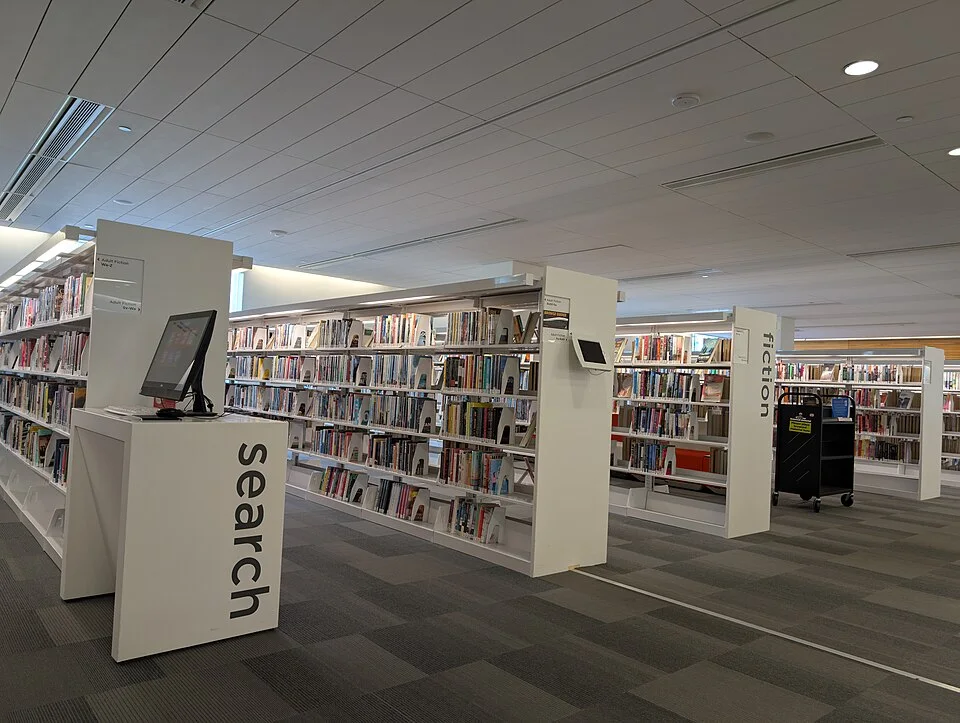
Some branches provide self-service pickup; others keep holds behind a desk. The two arrangements distribute work differently. Consider how a reader discovers where to go, whose help is available, and what can be seen about another person’s reading choices. Signs that are clear to staff may assume a reader knows the distinction between requests, returns and borrowing. The aim is to let the reader make a predictable return to the branch without requiring everyone else to see more than they need.
Return is the other end of the service
A useful way to understand returns is to compare a book that belongs to the branch with a book that reached it to fulfil a hold. Both may go through the same public return point. One could go back to nearby shelving. The other might be assigned to a reader somewhere else or sent to a different destination according to local procedures. A book that disappears from the counter has entered a process rather than instantly becoming available everywhere. Public catalogue information is helpful if it gives readers enough detail to know whether an item is likely to be ready soon or whether they should look for another copy.
Ask what happens after the item is returned. It can be sorted, assigned again, put on a shelf or sent onward. A title available through a well-connected catalogue can have several journeys without the same reader seeing any of them. If you want to know how usable the system is, try describing the task from the point of view of a first-time reader who only has fifteen minutes. Success includes recognising the notice, reaching the right shelf or desk, and finding an open way to check out. The small pickup area matters because it is where all of those promises become a book in someone’s hands.
Read the notification before planning the trip
Imagine receiving a message on Monday and having time to visit only on Wednesday. What do you need from the notice? The name of the branch comes first, then the period for which it will hold the copy. If a special desk keeps shorter hours than the building, that can be decisive. The way to verify that detail should be easy to find without someone having to reconstruct the system. When evaluating a service, ask where a person first discovers the terms of pickup and where they can verify them after they leave the message.
The notice can also be a matter of accessibility. An email, text or message in a library account reaches people in different circumstances. A reader might share an email account, have a phone that cannot receive ordinary messages in a particular place, or check an account only when using a public computer. New York Public Library distinguishes hold notifications from the earlier step of requesting an item. Another library may make different arrangements. The useful test is to ask what information is available to a reader through the channels that particular service actually offers, and how a reader changes their preference when it stops working for them.
If a visitor reaches the branch and cannot find the item, a well designed route gives them a way to ask for help. A first time reader may have come to the wrong shelf, or the item may indeed be missing. A sign that depends on the user already understanding the language of holds will make both problems look like personal mistakes. Clear signage can describe what the person sees on the notice and what they need to do next. That is more helpful than a broad claim about where any item in the catalogue can be found.
Sort the public shelf without exposing the reading list
Self-service pickup presents a design choice about how a person finds an item. The shelf can be arranged by a short assigned identifier, or staff may use another local convention. Any notice explaining the system should tell the reader what to look for and where to stand without making extra personal information visible. A title or part of a name can reveal more in a small shared space than it did on an individual screen. The question of convenience is therefore tied to the question of what an observer beside the shelf can learn about another person's visit.
Leaving enough space to read the labels helps. A user who needs to approach closely should be able to stay clear of the main path. Someone using the shelf for the first time may take a few moments to find the right group and compare identifiers. An arrangement with a clear beginning and end reduces the time spent standing in the narrowest place. If the shelf cannot accommodate a variety of approaches, a dependable way to seek assistance keeps the service usable for more readers. Compare what a particular branch provides with the people who use it rather than assuming one self-service layout suits every room.
A better measure than how many copies moved
The library can count the number of items transferred. A reader may care more about whether the trip was predictable. An item that travelled across town and was picked up on the first visit represents both outcomes. A delayed arrival, unclear notice or closed desk can leave a transport record showing success while the reader has to return another day. Counting that additional visit in a service review would make the practical difficulty visible. Improving the notice can then save more time than shortening a leg of the book’s journey.
Try laying out the story of a successful transfer in four steps: request, assignment, ready notice and collection. For each step identify the piece of information that tells a reader what has happened. Look for a point at which it would be easy to take the wrong action. The small shelf at the branch is the visible end of that sequence. Its success can be understood by asking how much the reader needed to know to get there once, on time, and with a clear way to leave with the item.
What happens to a request the reader can no longer use
Sometimes the proposed pickup day ceases to be possible. A reader may have chosen a branch near a workplace and only later find that they will be away. They may have found the title elsewhere. Discovering whether the request can be cancelled, paused or moved is another part of the experience, and libraries differ in the choices their systems support. Look for the library’s actual explanation and check whether a copy has already been assigned before assuming the options are the same at every stage.
From the system’s perspective, making an unused copy available again allows the next request to move forward. From the reader’s perspective, a simple way to update a plan reduces the awkwardness of an unwanted notice or a missed pickup. Those goals can meet in an interface that states the consequences of the action in ordinary language. A clear explanation can prevent people from phoning or visiting just to learn when a book will leave the shelf. Include the failed or changed plan in a service review. Good public service includes a workable path out of a request as well as a path to a successful collection.