The Reference on a Planning Notice
A short code on a public notice can lead from a fence to drawings, amendments and a decision. It matters where that trail starts and which version of the proposal a reader is looking at.
In this story 5 sections
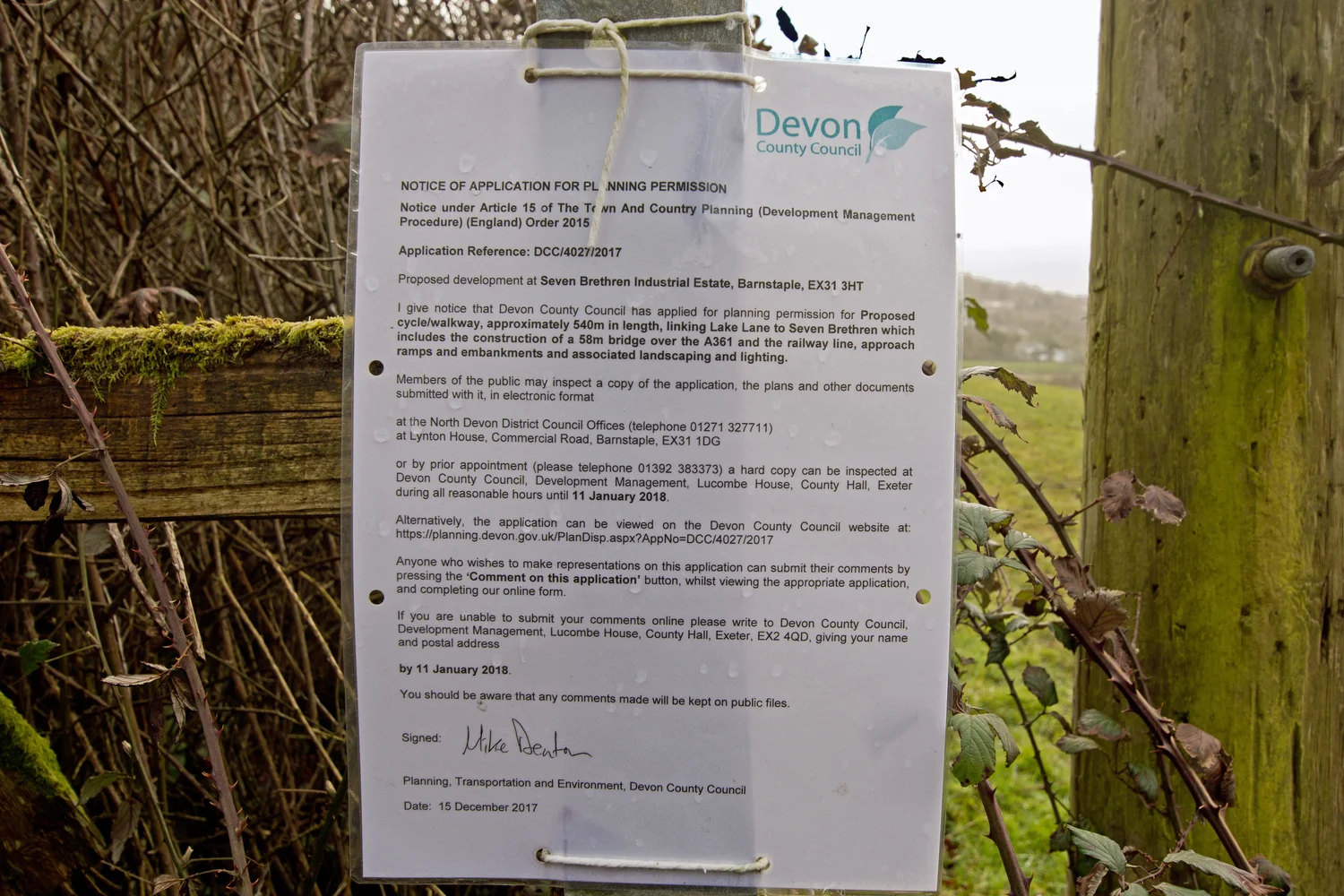
A printed sheet tied to a fence has to tell someone passing by that a piece of ground may change. It has only a few lines for the description and no room to show every drawing. That makes the reference number easy to undervalue. At the point where a sentence such as proposed development ceases to be enough, the number gives the reader a way to find the application, its accompanying material and eventually a decision.
The photographed notice on this page comes from Tawstock, England. It is an example of a site notice, not an announcement that the development in the photograph is open to comment today. The processes described here are illustrated by England's planning guidance and North Devon Council's public instructions. Which documents exist, when comments are invited and where to send them are things to check with the authority and application in question.
Start with the record, not the street name
A name makes it easier to talk about a place with a neighbour. A council record usually needs a more precise key. Two applications can relate to the same address, and a site can have a name familiar locally without being listed under that name. Someone who types only part of the street into a search may find an old application, another address on the same road or a different phase of work. North Devon Council asks people who correspond about an application to include its number. That number is also a sensible first check when reading the material.
Imagine two notices about a building, one for work to an entrance and another for changes to several parts of the property. The notices could use the same building name. They could even appear at similar times. A dated application record and its reference make it possible to ask which one covers the part the reader is interested in. Reading a plan associated with the entrance application need not explain why another drawing shows a larger area. The words on the notice are a route into the record rather than a substitute for its boundaries.
The site address should still be checked alongside the number. A reference copied with a digit wrong may return nothing or open an unrelated record. An address can supply a first indication that the number has not been entered correctly. If the notice is legible only in a photograph, check the characters again before acting on what the search returns. Letters and numbers in a reference work like a label in an archive. They are valuable mostly because they connect the right papers.
Read the proposal at the scale of the question
A location plan can show which area is associated with the application and how it fits among nearby streets. A site layout may give a more useful view of paths and the arrangement within it. Floor plans and elevations can answer still other questions. A single drawing may make the proposal look larger or smaller depending on scale. Before interpreting a line as the edge of a building or an opening, check the key and what the drawing says it represents.
For example, imagine a proposal that moves a pedestrian entrance along one edge of a property. A person interested in the change from the pavement needs to see more than the door on an elevation. Where is the current approach? What happens where the new path reaches public space? Does the plan show the entrance in relation to existing paths? Those are questions a well directed comment can ask even if the reader does not have the information to predict the effect.
It is also worth distinguishing a drawing labelled existing from one labelled proposed. The existing record can explain the current condition to someone who has never stood in front of the building. The proposed one shows what the applicant has put forward at that stage. If the two drawings cover the same wall, their titles and dates may be the quickest way to avoid confusing a window already present with a window that may be added.
Check whether the drawing has changed
A notice may not change each time a document is added to a public file. The application can contain drawings issued at different dates and a later version can replace or supplement an earlier one. Read the drawing number, revision and date alongside the application status and current files. England's government guidance recognises that further consultation may sometimes be needed when proposals are amended. That does not make every added file a fresh consultation. Look for the authority's current notice or description rather than assuming a new deadline from the mere presence of a second plan.
For a fictional example, say a diagram already downloaded on a Monday shows a service access from the east. A review on Friday finds a later drawing with a different access. A note about vehicles turning outside the east entrance might still matter if other parts of the proposal use it, or it might now describe an option no longer put forward. The reader should say which drawing was used and, if both remain on the register, ask which is the current representation. A comment remains easier to consider when it identifies the version that gave rise to it.
There is a small archival habit that helps: record the application number, drawing reference, revision and date near each note. When somebody else opens the public record, they can retrieve the same item or see why the project has moved on. A screenshot without an identifier can show a perfectly visible doorway and still send the next person looking through several pages for the wrong version.
A comment is more useful with a location and a reason
A reader who says this entrance is difficult to reach might be referring to any point on a long frontage. In the fictional example, they could name the entrance on the drawing and say which direction someone arriving on foot would approach from. They can distinguish an observation from a prediction: the existing path ends at this point; it is unclear from the plan how someone would reach the new entrance. That gives the authority a concern it can relate to the application rather than a general description of an inconvenient street.
North Devon Council gives examples of planning considerations that can include access, road safety, landscape and amenity. Its guidance also distinguishes matters it does not consider as part of planning from the issues that belong in the record. The applicable scope and procedures can differ elsewhere. Before drafting a comment, consult the authority's published guidance for the application. The aim is to put forward observations relevant to the decision it can make, rather than tell an unrelated dispute through the most recent public form.
Check what will be published before sending material. Councils can provide their own explanation of what details are made public and how representations are used. North Devon's notice, for example, says names, addresses and comments can be publicly available while some contact details are withheld from the website. That is a reason to check the local notice, use the official channel and avoid placing extraneous personal information in the text or attachments. The fact that a message can be sent by email does not imply it remains a private conversation.
Follow the number after the deadline
Suppose two neighbours are reading a notice together, and one says they saw a new plan at a meeting last week. That gives them a second source to identify. Was it a drawing displayed by the applicant, an amendment added to the planning record or a sketch someone made to explain an alternative? Each can help the conversation, but only the relevant authority's record can establish what is logged as part of the application. Asking for the drawing and its place in the file is a useful step, even when the sketch is a faithful account of the discussion.
The end of a consultation and the record of a decision are different events. An initial notice will not generally contain a later decision. Check the current application status before using a proposal to explain what a council approved. A decision notice and related material, if available, can describe what was decided and the documents or conditions to which it refers. An application summary is still just the summary; the eventual decision may have its own language and its own date.
This matters for anyone telling a neighbour what happened after seeing the original sign. The notice might have disappeared from the fence. The drawings might have changed. The question may no longer be whether there is a proposal, but what version was considered, what was decided and where the decision can be read. Looking those up by reference avoids turning a remembered line from the notice into the entire public record.
The sheet on the fence is a deliberately brief point of entry. Its address helps a passerby recognise the place. Its wording identifies a proposal and points toward official information. Its reference gives the way to recover the papers after both the reader and the notice have moved on. Those are different jobs. The smallest string on the sheet can matter for the longest time.