When a Community Garden Opens
A garden’s public hours involve much more than a key. The arrangement determines how a visitor finds an open gate and how a group can keep offering that welcome.
In this story 5 sections
A woman on a city sidewalk stops beside a community garden. She can see a chair from the street and an inviting path into the middle of the lot. She may be about to learn quite a lot about the group that tends the land, without setting foot in it. A posted schedule tells her whether the place expects a visitor now. The latch tells her something about what is actually possible. A space may look as open as any public place until she has to know how to get inside.
A volunteer who has been weeding within earshot may have quite another account of the same afternoon. They have worked out which beds need attention, which tools they can leave for a moment and who is expected to secure the gate later. The two views meet when the visitor arrives. The rest of the garden might be informally arranged and beautifully unpredictable. Public opening is one piece that benefits from a plain agreement with people who cannot anticipate what is happening that day.
A garden works by several calendars
One calendar is seasonal. Some things happen according to conditions and change from week to week: the character of a Saturday workday is different when plants need moving and different again when there is little to do but keep things watered. Another calendar belongs to the people who tend the place. Their hours fit around houses, jobs and families. A third needs to belong to visitors. Someone two streets away should be able to plan when to stop by without knowing either of the other calendars in detail.
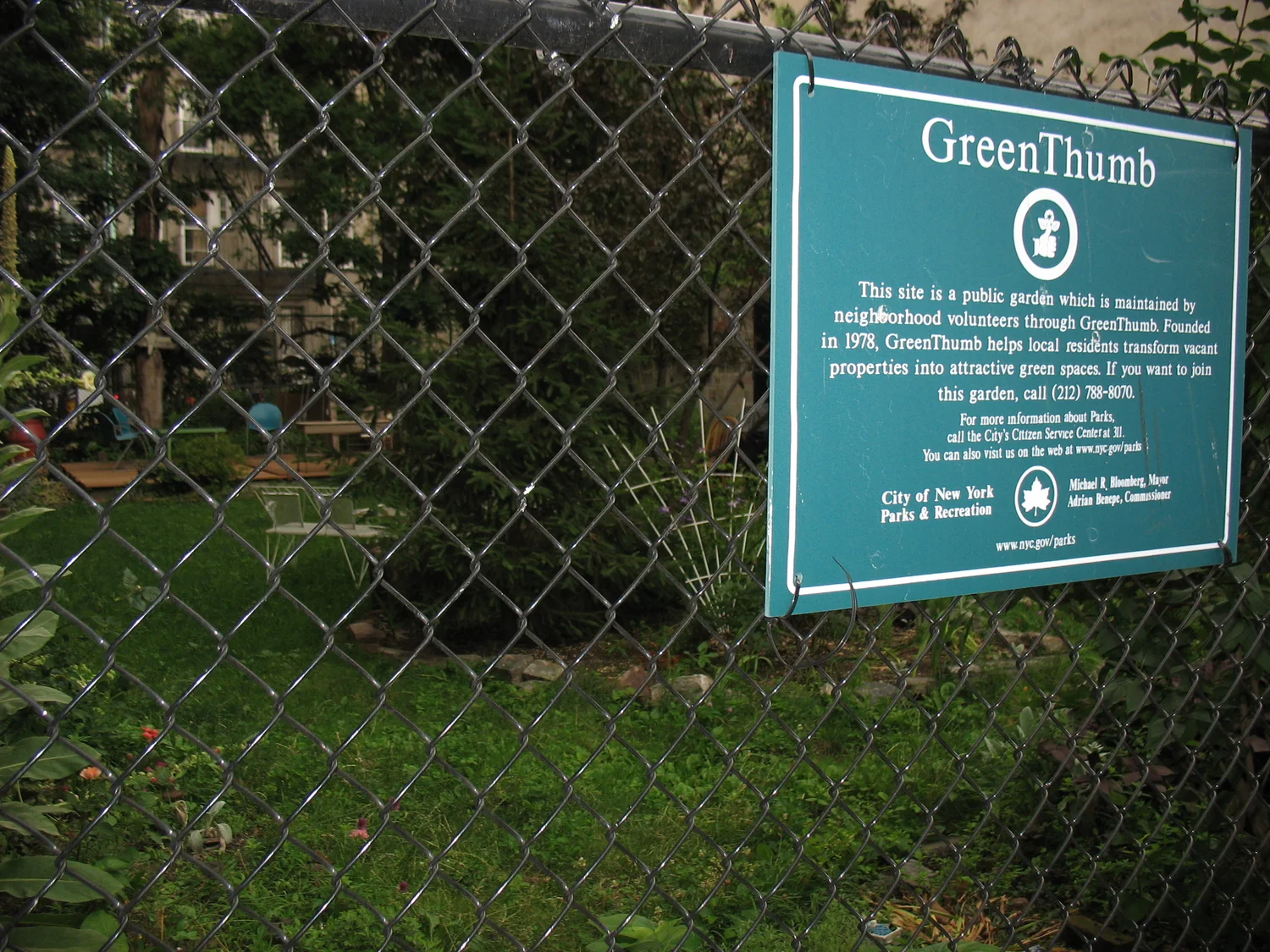
New York City’s GreenThumb program gives an example of how the distinction can be written down. Its published handbook describes public opening hours during the gardening season and expects part of the schedule to be posted at the gate. The public hours are distinct from membership and growing there. The numbers apply to the program and agreement described; for a particular garden, use the current schedule and information from the relevant group or agency. The general idea is useful anywhere. The fact that members work for a long time in a garden each week is no substitute for telling other people when they can visit.
A sign is also an undertaking to people who come because of it. If it says there are regular hours on Saturday and the gate is frequently locked on Saturday, the group may have two different problems. The opening routine may be too difficult for members to keep, and the information is not correct for a reader standing on the sidewalk. Adding more social media announcements without solving the Saturday rota does little for the first problem. Quietly changing shifts without changing the sign abandons the people who used the second.
Give the schedule a physical place
At the entrance, check how a stranger sees the hours. There could be a perfectly up-to-date piece of paper on a tool shed, visible only after the person is already inside. Another notice on the street could contain a richly detailed announcement for a past event, covering exactly the room where the ongoing hours would be useful. Try beginning outside the obvious approach. Is the entrance visibly distinct from an adjacent fence panel? Is there room to pause beside the notice without blocking the way? If old hours are still readable somewhere else, it is reasonable for someone to wonder which ones apply.
A visitor often wants a little more information than open or shut. They might need to know whether a place they intend to visit is part of the public path, whether a table is reserved for an activity, or whether the surface is suitable for the way they travel. These are questions about the actual experience inside the gate. A notice need not try to fit the whole garden into a paragraph. A simple route description and good ways to find somebody when the arrangement is unclear can do much of the work. Testing the wording with someone who has never visited may reveal information members do not realize they know.
Languages make a practical difference as well. The words for regular public hours should be visible even if a longer membership statement makes sense only to some neighbors. A clear timetable can cross many of the language differences on a block; it helps even more when the day and time conventions are easy to recognize. Where appropriate, use translations distributed where actual visitors look. Reserve a place for a changed date that does not require printing every sign anew. The state of the entrance is useful information often enough that it should be possible to maintain it quickly.
What the person with the key agrees to do
Running open hours involves a small collection of tasks. Somebody checks that the entrance is ready, decides where people can find information and knows how to hand over or close for the day. When a group is small, the same two people may end up doing that work often. The trouble with a schedule can be invisible even to other active members: a visitor gets a consistent welcome for a while because a handful of volunteers continually compensate for awkward shifts.
Put the actual work into the schedule. In a fictional four-person group, one volunteer is consistently available in the morning but travels on most Fridays. A second lives nearby but can only stay for a short block. Someone else is happy to host an announced workshop every month. Those are different commitments. A realistic plan can make the morning reliable, find another use for the shorter period and advertise the workshop separately. A more ambitious sign might offer a broad promise the group can meet only by asking the same person to be available unexpectedly.
A handover benefits from a plain contact and confirmation. If two people can both assume the other one opened, that uncertainty is largely a design problem. Where a change must be made, decide in advance where it will be posted and whether a notice is needed at the physical gate. A visitor may never have looked at a phone link before walking over. An explanation on the fence helps the person who made a trip at a reasonable hour understand whether to try later. Repairing the scheduling mistake the next day will not do that work for them.
Open does not give everything the same status
A garden can have rows in which people are growing food for different purposes, a table that members sometimes share with visitors, and a quiet path between them. A public invitation to enter does not tell a new person which fruit is there to be picked or which sign-in sheet happens to be for the next project. These distinctions generally deserve ordinary sentences that can be read in place. A generous promise loses a good deal of its value when someone notices a sign only after doing the wrong thing and spends the rest of the visit wondering if they are unwelcome.
A plant label can answer what is growing without saying who tends it. A boundary in the path can answer how to reach a seating area without inviting the person to step into a bed. A clearly described activity can have participants, times and limits of its own. Try placing these small bits of information where the visitor actually needs them. A long list of prohibitions at the entrance may be much less useful than two directions inside. A short greeting and some physical cues will often do more than an elaborate rule board that no one stops to read.
Some visitors will be there precisely because they hope to join. Others only want a few minutes of quiet. They can use the same entry without being asked to make the same choice. Make the information for joining easy for someone who is looking for it, and allow the first visit to remain an ordinary visit. A successful public hour can be one in which the group found a new member. It can also be one in which no name was exchanged and a person learned that this is a place they could return to.
Keep a small record across a season
If the group wants to understand its hours, it can note which ones took place as expected and which had to change. It does not need to keep an identity for every person who wandered through. Whether people had questions about finding the gate or commonly arrived just after closing is useful on its own. Combine that with the group’s ability to staff the periods. A plan for the following season gets stronger when visitors have a clear way to describe the trouble they had and volunteers can give an honest account of what they can do.
At the end of a well-run visit the latch might be the least interesting thing a person remembers. They came away thinking about a path between tomatoes, shade on a chair or a patch of flowers growing against brick. Their ability to reach those things was built through a sequence of small choices by people they may never meet. The sign was not a decoration. It brought one of those choices to the street and gave someone a time when they could step inside.